Pages

Tuesday, 26 July 2022

The Worst Drinking Habit Aging Your Brain Faster, New Study Finds

 There are plenty of reasons to avoid drinking too much wine or beer, especially since alcohol can be harmful to your health in various ways. However, you might now want to cut out alcohol completely—or as much as possible—as a recent study has found that even drinking a moderate amount may be aging your brain faster.

In the July 2022 study, published in PLOS Medicine, researchers collected data from 20,965 participants whose mean age was 55. While 2.7% of those involved didn't drink any alcohol, the remaining participants were drinking an average of 18 units every week. To put that into perspective, 18 units is about the same as six sizable glasses of wine. If you prefer beer, then you'll be interested to know that it's the same as seven and a half cans of your favorite brew. That turned out to be too much when it comes to keeping the brain healthy.

"In the largest study to date, we found drinking greater than 7 units of alcohol weekly associated with iron accumulation in the brain," said the University of Oxford's Anya Topiwala, who was behind the study, per EurekAlert! "Higher brain iron in turn linked to poorer cognitive performance. Iron accumulation could underlie alcohol-related cognitive decline."

drinking beer
Shutterstock

"The researchers found that moderate alcohol consumption was associated with greater iron accumulation in the basal ganglia, a group of brain regions that helps us perform cognitive, emotional, and movement-related functions," Emma Laing, PhD, RDN, a clinical professor at the University of Georgia and national spokesperson for the Academy of Nutrition and Dietetics, tells Eat This, Not That!. "Higher levels of iron in the basal ganglia were associated with poorer measures of cognitive function."

"The brain is very sensitive to changes in iron metabolism," Laing says, explaining that iron in the brain causes cognitive decline. "Abnormally high iron in the brain has been associated with oxidative stress, which leads to neuronal damage and cell death."

Tips to cut back on alcohol

If you'd like to reduce the amount of alcohol you drink to avoid potentially aging your brain, Laing says that you might want to "choose light-alcohol, non-alcoholic, or alcohol-free beverages." Beyond that, "having one or two glasses of water along with each drink will help curb over-consumption, as will avoidance of drinking alcohol on an empty stomach."

However, "while some people might enjoy replacing their alcoholic drinks with non-alcoholic alternatives, those who suffer from or who are recovering from an alcohol addiction are cautioned from trying these, as the alternatives might heighten the urge to drink alcohol." Indeed, Laing notes that "the health implications of alcohol consumption depend so highly on the individual, their health conditions, and medications they take."

Finally, Laing says, "If you tend to drink excessively or notice that alcohol causes problems in your life, counseling and recovery programs would be recommended. Your primary care provider can also advise you on appropriate resources. If you don't drink, starting this habit is not recommended."

5 Protein Powders To Stay Away From Right Now

 Protein powders can provide a quick and convenient burst of nutrition before or after a workout, when you're on the go, or in between meals when those hunger pangs hit. But not all protein powders are created equal. In fact, some can contain hidden health risks in the form of artificial flavors, thickeners, added sugars, and other shady ingredients. What's worse—a 2018 Clean Label Project investigation found that some of the most well-known protein brands contained alarming levels of lead, arsenic, mercury, cadmium, and BPAs.

Protein powder is considered a dietary supplement—which means the manufacturers, rather than the FDA, oversee the labeling and safety of the products.

"Since the supplement industry is largely unregulated, it's important to choose well-known brands with third-party testing standards for safety," says Rachel Fine, RD.

With that in mind, here are some of the protein powders you might want to avoid the next time you are at the grocery store or are ordering online.

1

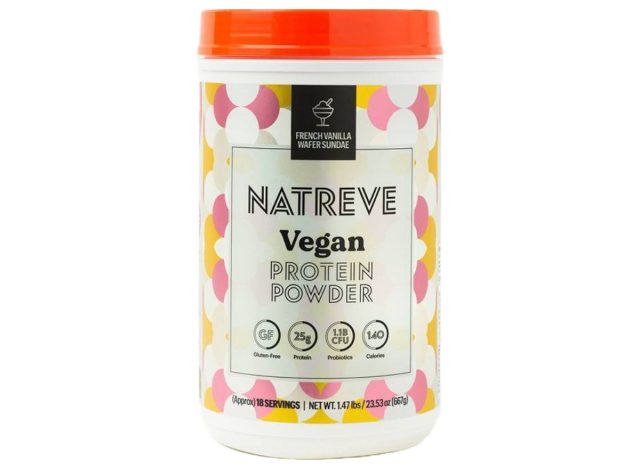
Natreve Vegan Protein Powder: French Vanilla Wafer

natreve french vanilla wafer sundae protein powder
Courtesy of Target

From a health standpoint, there's nothing particularly concerning about Natreve's "moo-less" protein powder: in fact, this well-balanced protein is non-GMO, gluten-free, contains no added sugar, and is made with no artificial flavors, colors, or sweeteners.

However, if like most of Natreve's consumers you're specifically buying this protein because it's vegan, it's worth noting that there's been a product recall because it's been discovered to contain undeclared milk. Due to a manufacturing production error, containers from two lots contain milk-based ingredients that don't appear on the label.

For people who have an allergy or severe sensitivity to milk, consuming this protein powder could cause a life-threatening allergic reaction. And for those who are lactose intolerant, it could still cause some pretty unpleasant digestive symptoms. 

2

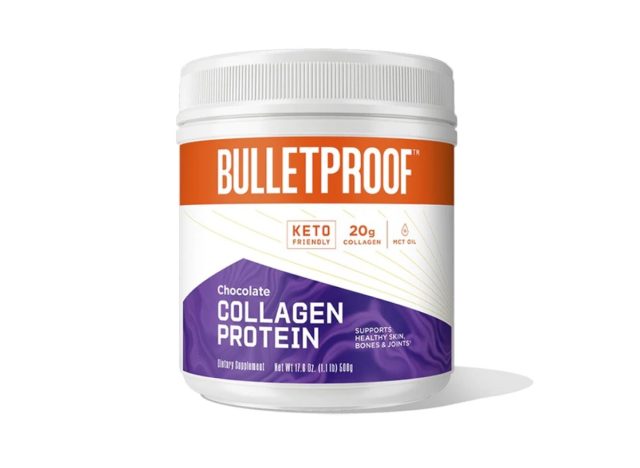
Bulletproof Collagen Protein

bulletproof chocolate collagen protein powder
Bulletproof

Collagen is a particular type of protein that serves as a building block for all your body's connective tissues. In recent years, collagen protein powders have become all the rage, promising a wide range of impressive potential benefits—from boosting muscle mass to supporting bone health. But Kristin Draayer, RD, doesn't recommend it.

"Collagen protein has been touted to be good for hair, skin, and joint health, but there is no valid evidence to support these claims," she explains. "Through the process of digestion and absorption, collagen is broken down into amino acids before being absorbed into the bloodstream. The body then uses these amino acids to build proteins that the body needs. There is no guarantee that the amino acids will be restructured into collagen. In fact, it's more likely that they won't be."

Not only that, but Draayer says collagen is a poor protein for muscle building since it doesn't contain all nine essential amino acids—particularly leucine, which is critical for the muscle-building process.

But the concerns don't stop there. The Clean Label Project's study of leading collagen supplements found that 64% tested positive for measurable levels of arsenic, 37% tested positive for measurable levels of lead, and 34% tested positive for trace levels of mercury.

Specifically, Bulletproof's Collagen Protein (Chocolate flavor) topped the list of worst offenders, containing 2.1 mcg of arsenic, 9.17 mcg of cadmium, and 1.33 mcg of lead. A 2022 review in The Journal of King Saud University found that ingesting excessive levels of these heavy metals can cause significant damage to every organ of the body, leading to an increased risk of cancer, neurological defects, respiratory disorders, osteoporosis, and other conditions.

3

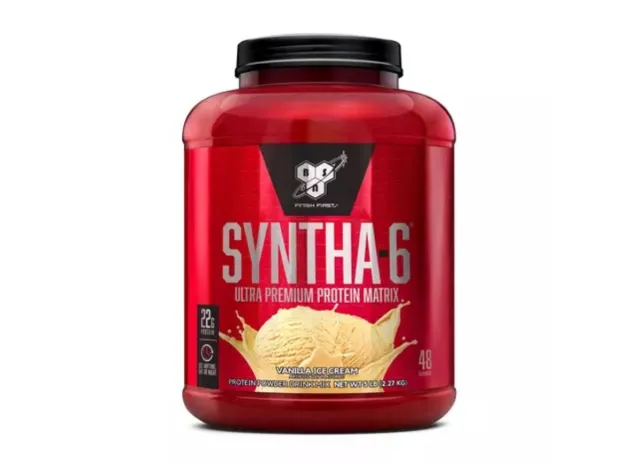
BSN Syntha-6 Protein Powder

bsn syntha-6 protein powder
BSN

Bill Bradley, RD, CEO at Mediterranean Living recommends skipping this protein powder because it contains a one-two punch of corn syrup and sucralose, an artificial sweetener.

"Sucralose and other artificial sweeteners are bad for your gut, and corn syrup can lead to diabetes and obesity," says Bradley.

That's not the only reason to avoid this product—the ingredients also include acesulfame-potassium, another artificial sweetener. While the FDA has deemed this ingredient safe in limited quantities, studies have shown that consuming it in high amounts may lead to an increased risk of cancer and metabolic syndrome, and may cause changes in brain function.

4

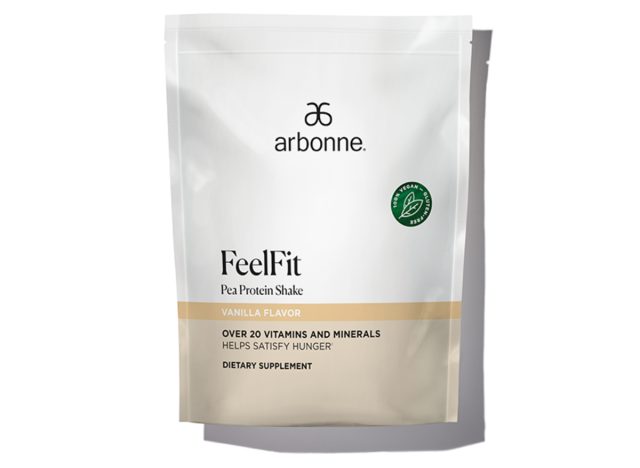
Arbonne FeelFit Pea Protein Shake

arbonne feelfit pea protein shake
https://www.arbonne.com/us/en/shop-all/nutrition/protein/feelfit-pea-protein-shake—vanilla-flavor/p/2070US

The first ingredient in this product is the "Arbonne Protein Matrix Blend," which contains 56% pea protein. The Clean Label Project found that plant-based protein powders, including pea protein, tend to have higher levels of heavy metals than their dairy-containing counterparts. Not only that, but nearly all cocoa powders—another ingredient found in this powder—have been found to contain cadmium.

It's also worth noting that peas contain phytic acid. This anti-nutrient binds to essential minerals like iron, calcium, and zinc, as it passes through the gut, preventing your body from absorbing them.

Arbonne's protein powder also contains thickening agents, which have been known to cause gas, bloating, constipation, and diarrhea.

5

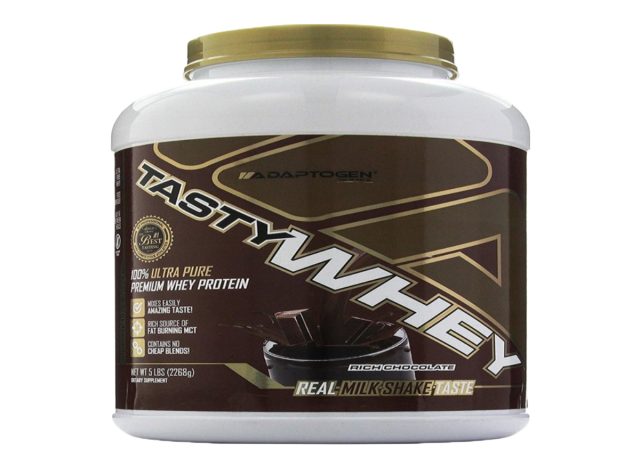
Adaptogen Science Tasty Whey Protein Powder

adaptogen science tasty chocolate whey protein powder
Courtesy of Walmart

There are lots of reasons to stay away from this protein powder—including pesky thickeners and artificial flavors.

For one, it contains partially hydrogenated coconut oil, which produces a high amount of trans fats during the hydrogenation process. Trans fats can increase "bad" LDL cholesterol while decreasing "good" HDL cholesterol, thus increasing your risk of heart attack or stroke.

Adaptogen Science's protein powder also includes sucralose, which has been found to wreak major havoc on the bacteria in your gut.

Draayer advises forgoing protein powders with artificial sweeteners, and lightly sweetening your shakes with fruit, or a dash of honey or maple syrup.

5 Worst Foods for Your Kidneys

 The kidneys are the warriors of the human body: balancing fluids, electrolytes, and solutes to filter water and waste out of our blood to make about 1,500 milliliters (50 fluid ounces) of urine daily. This is handled by the one million functioning units of each kidney called the "nephrons" which include tubules, limbs, and other structures, along with the glomeruli, which produce ultrafiltrate.

Two chronic diseases that increase the risk of kidney disease are diabetes and hypertension (high blood pressure). Kidney disease is ultimately classified into four conditions: kidney stones, acute kidney injury, chronic kidney disease (CKD), or end-stage renal disease (ESRD). Limiting sodium and saturated fat intake are primary ways to reduce risk and/or manage diabetes and hypertension, which could be protective against developing kidney disease.

All this to say that the kidneys are a force to be reckoned with, but they also can be prone to damage if we don't take care of them with healthy behaviors, including what we eat. Here we discuss five of the top foods to shy away from to best protect your kidneys.  

1

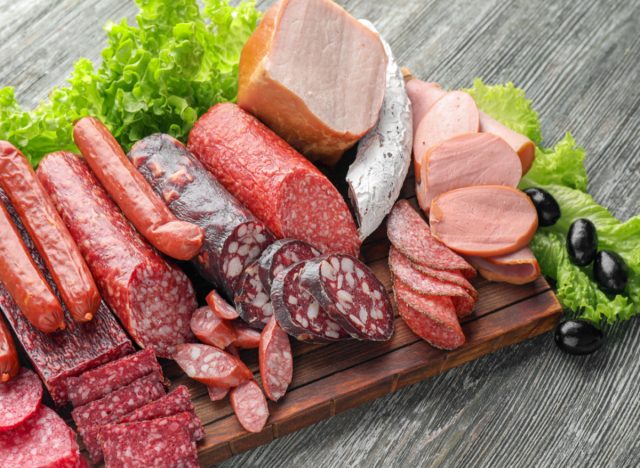
Processed meats

different deli meats and sausages
Shutterstock

Meats that have undergone processing, such as bacon, sausage, hot dogs, deli meat, and burger patties are a double threat to kidney health: they are likely high in sodium and animal-derived protein. Excess sodium intake beyond 2300 milligrams (mg) per day, on a regular basis, is conducive to a diet that may increase blood pressure, and this creates extra stress on the kidneys. It is also suggested in recent literature that more animal protein than plant protein in the diet may increase the rate of kidney disease progression

2

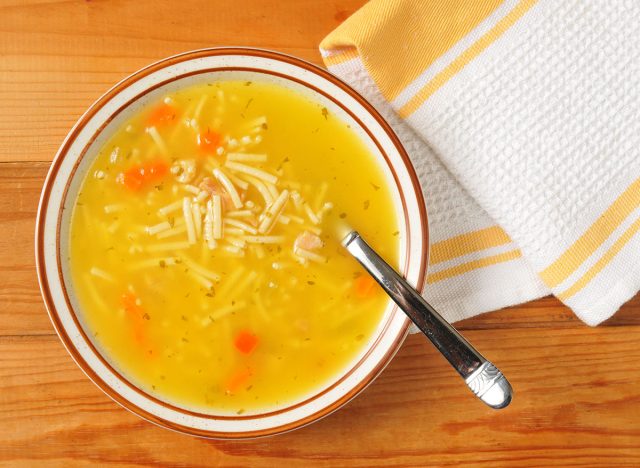
Soups

chicken noodle soup
Shutterstock

Often regarded as a light lunch side or a way to calm a sore throat if experiencing cold or flu-like symptoms, soups are unfortunately laden in salt. Even if soups are homemade, they will often use beef, chicken, or vegetable stocks which register at over 800 milligrams of sodium per cup. There are reduced sodium and low sodium versions on the market, but most consumers find that the flavor is off and, well, could use more salt. You can try your luck at making a sodium-free stock of vegetable scraps, herbs, and spices to impart flavor to a soup base; however, it may be best to just steer clear of soups altogether.

3

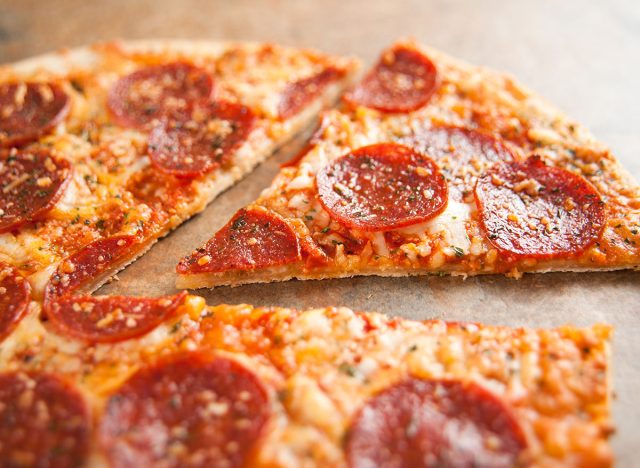
Frozen pizza

frozen pizza cooked
Shutterstock

America's favorite non-dessert pie usually is made with the same layers: white bread crust, high sodium tomato sauce, high fat cheese, and processed meat like sausage or pepperoni. Turn over your next frozen pizza package and you may be astounded to find nutrition facts that are in the quadruple digits on sodium and exceed recommendations for saturated fat. Takeout or restaurant pizza isn't much better but could have some nutritional redeeming qualities if you are able to customize the order (e.g., meat-free, half the cheese, whole wheat crust, etc.). 

4

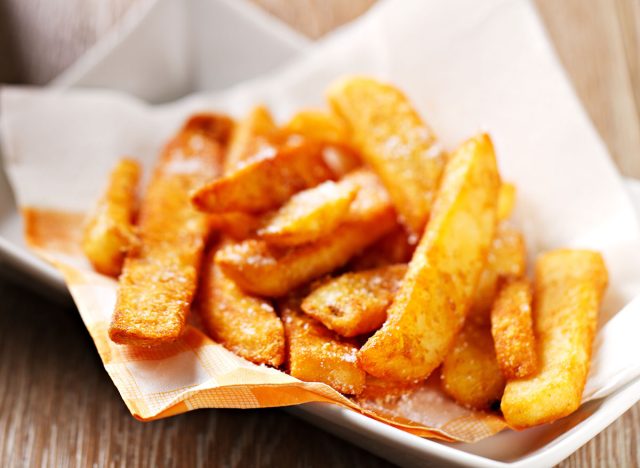
Fried potatoes

french fries
Shutterstock

Potatoes are the nation's number one consumed vegetable. And the number one form in which it's consumed? Fried. Whether your preference is for French fries, hash browns, potato chips, or potato pancakes, these foods aren't doing your kidneys any favors. Deep-fried foods are best avoided to protect your heart and kidneys. Potatoes are also high in potassium, which is a mineral usually advised to keep tabs on if your kidneys are compromised and reach CKD stage 3A or later stages of kidney failure.

5

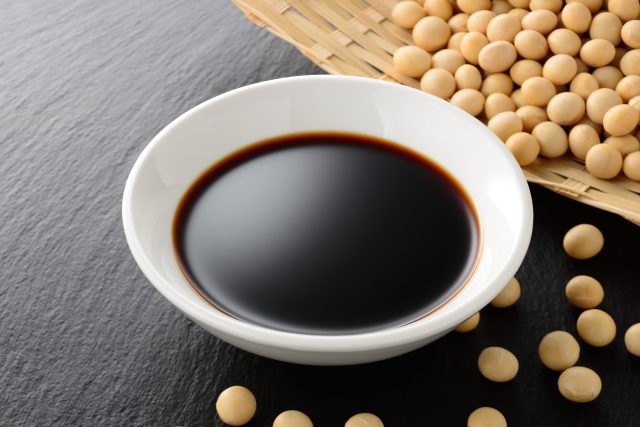
Soy sauce

Soy sauce
Courtesy of Shutterstock

Soy sauce, as well as its cousin tamari, are some of the highest sodium sauces available at the supermarket. These products have a shocking 950 milligrams of sodium per one-tablespoon serving, which is nearly 50 percent of the daily value (DV) for sodium. Soy sauce is classically used to impart an "umami" or savory flavor. See if there is a way in your recipe to substitute low-sodium ingredients like mushrooms, tomato paste, nutritional yeast, or a flavored vinegar, in place of soy sauce.